Experiential & Environmental Design

Puppy
Bowl
XXII

Turning a JetBlue terminal at JFK into a living room, so travelers could stop, sit down, and go home with a dog.

Client Animal Planet / Discovery
Agency MAP360 Collective
Year 2026
Location JetBlue Terminal, JFK Airport
Scope Concept, Space Design, Production
Role Creative Director
Puppy Bowl XXII activation at JFK

An Oasis at 30,000 Feet (on the Ground)

Animal Planet came to MAP360 with a brief that was simple on its surface and genuinely tricky underneath: set up a puppy adoption event at JFK Airport tied to the Puppy Bowl XXII broadcast. The goal was to drive awareness for the show, create a shareable moment in one of the highest-traffic transit environments in the country, and, if everything went right, send some dogs home with new families.

An airport terminal is not a hospitable environment for an adoption event. It is loud, transient, stressful, and full of people who are already late for something. The design challenge was not just branding, it was permission. Permission for people to stop. To sit down. To let their guard drop long enough to interact with a puppy and maybe make a life-changing decision.

The concept came down to a single question: what is the opposite of an airport? A living room. So we built one.
From AI Mockup to Build

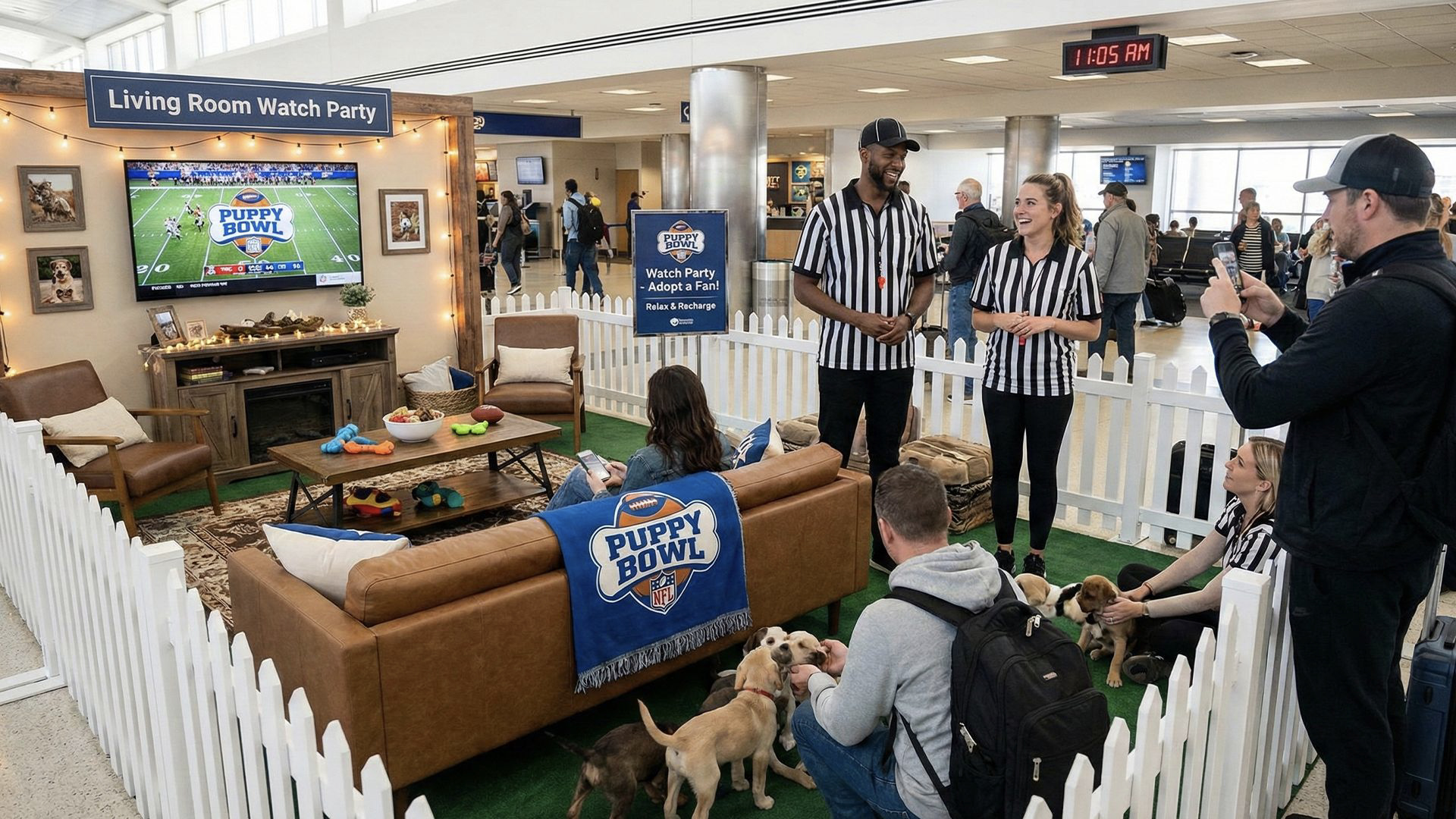
The production pipeline for this project reflects how MAP360 approaches experiential concepting in 2026. Rather than spending days in Photoshop before we knew the client was aligned on direction, we used AI visualization to get to a shared creative vision fast, then tightened into production-ready comps once the concept was approved.

Step 01
AI Mockup
Nano Banana
Rapid spatial visualization of the living room concept within a terminal environment. Used to align client on direction before committing to production comps.
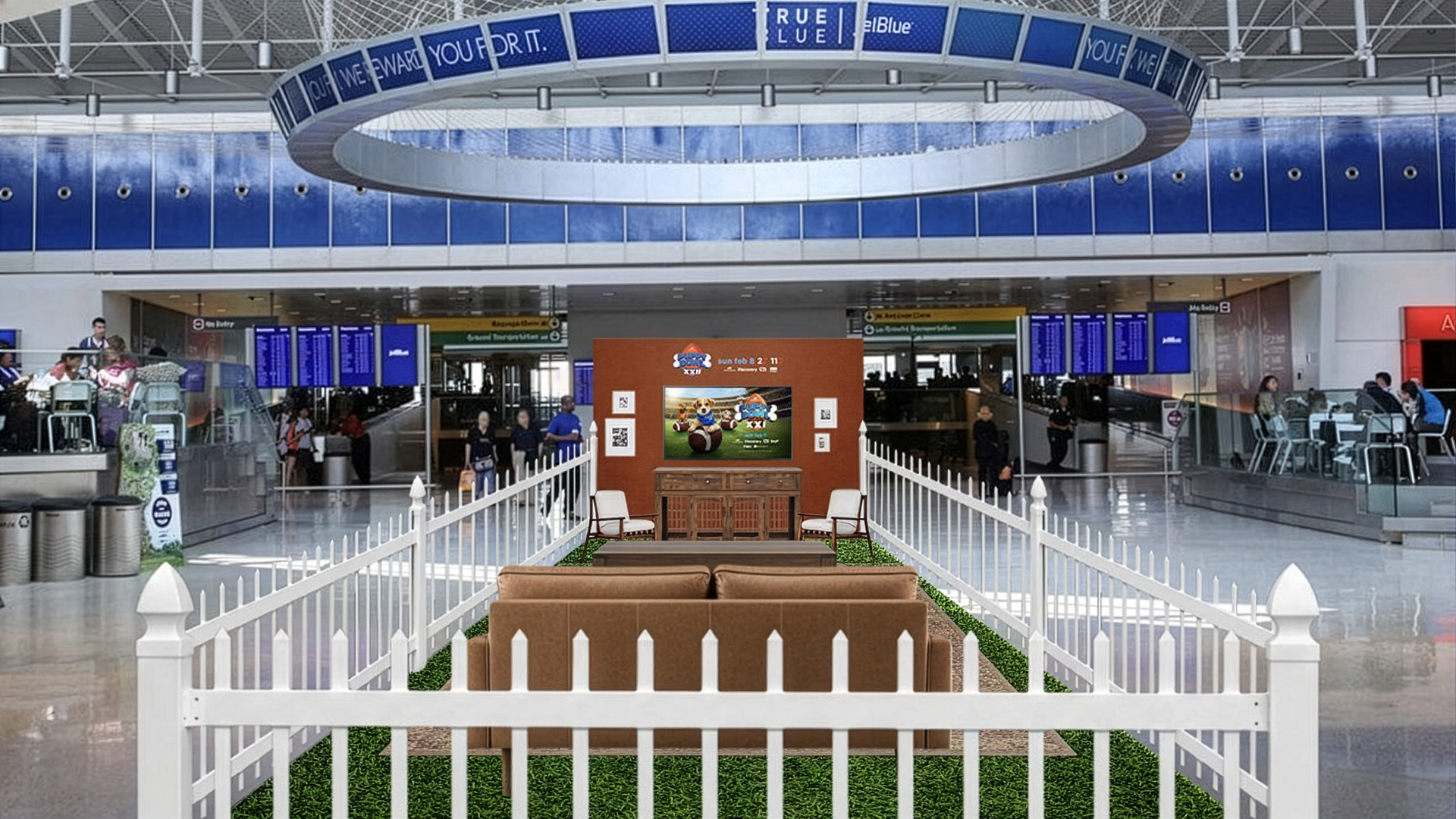
Step 02
Photoshop Mockup
Adobe Photoshop
Detailed production mockup incorporating actual furniture sourced by producers Jason Klein and Harris Freeman, with brand assets from the Animal Planet brand book.
Step 03
Build & Install
JFK Terminal
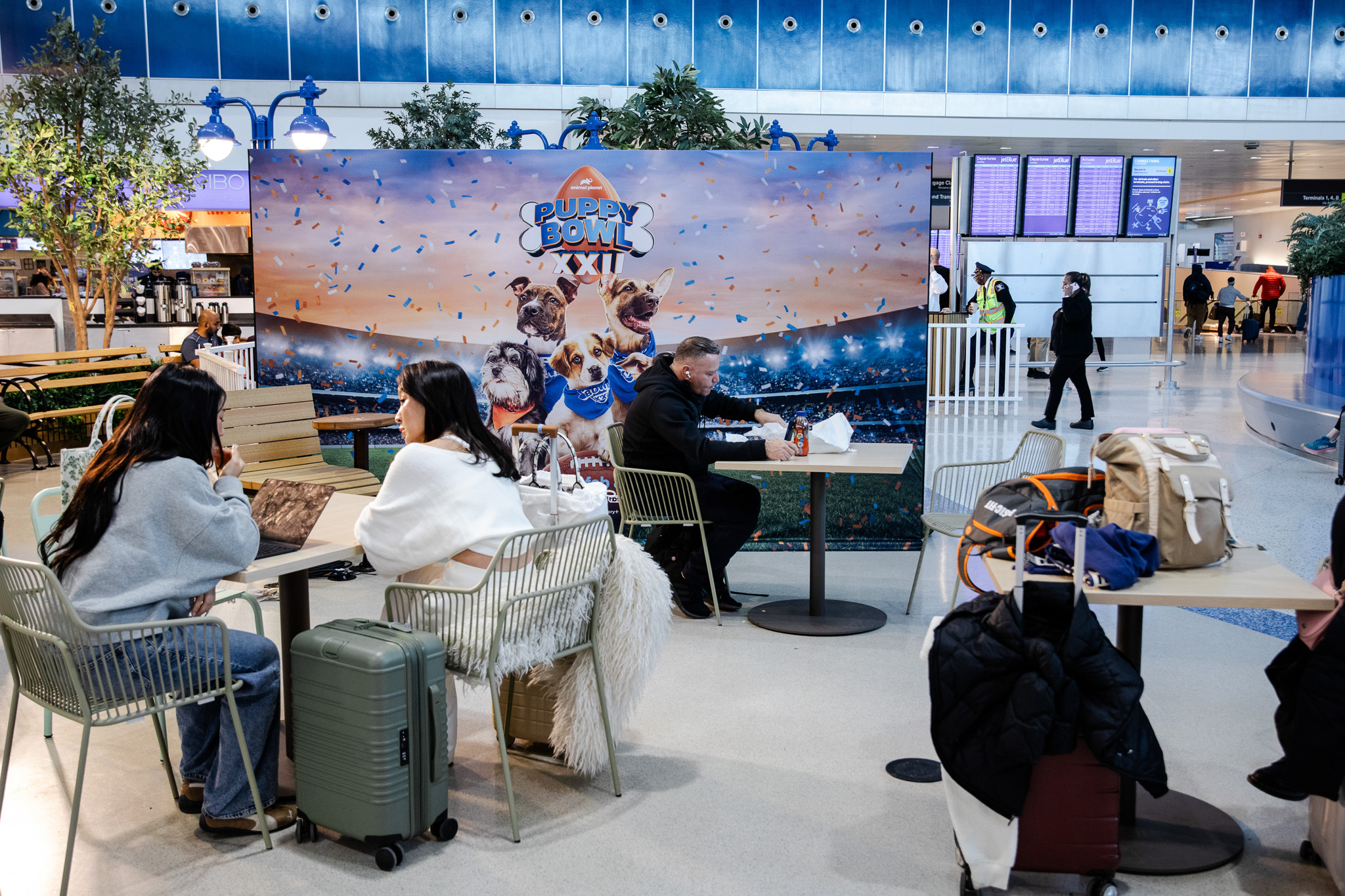
Full footprint installation in the JetBlue terminal. The final build matched the approved mockup, with the addition of a large-scale key art placement on the reverse of the back wall.
Note

Using AI visualization at the concepting stage is not a shortcut. It is a faster path to the conversation that matters: does the client believe in the direction? Everything downstream of that question is more efficient when the answer comes early.

AI mockup — Nano Banana Photoshop production comp Final installation at JFK

The Living Room

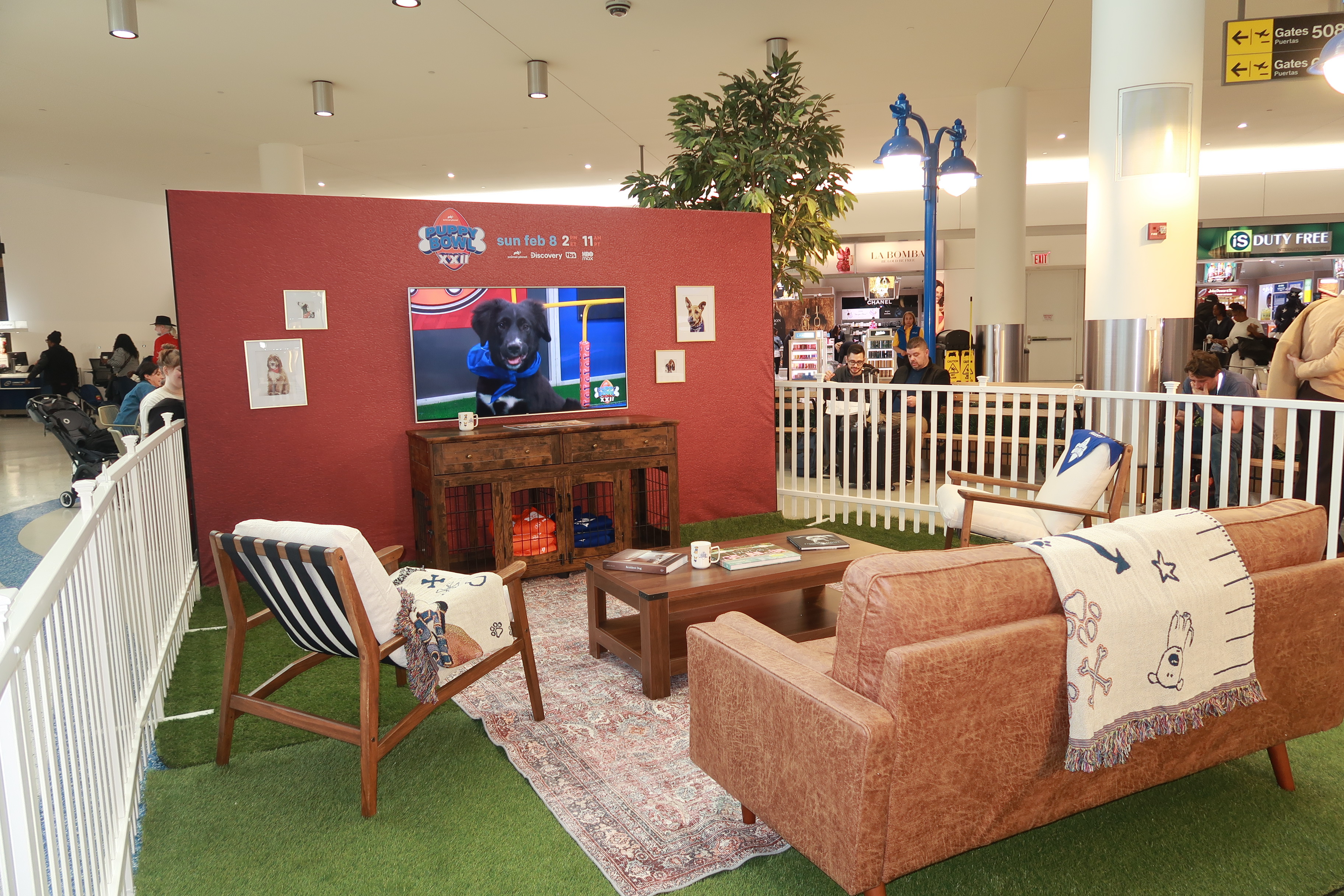
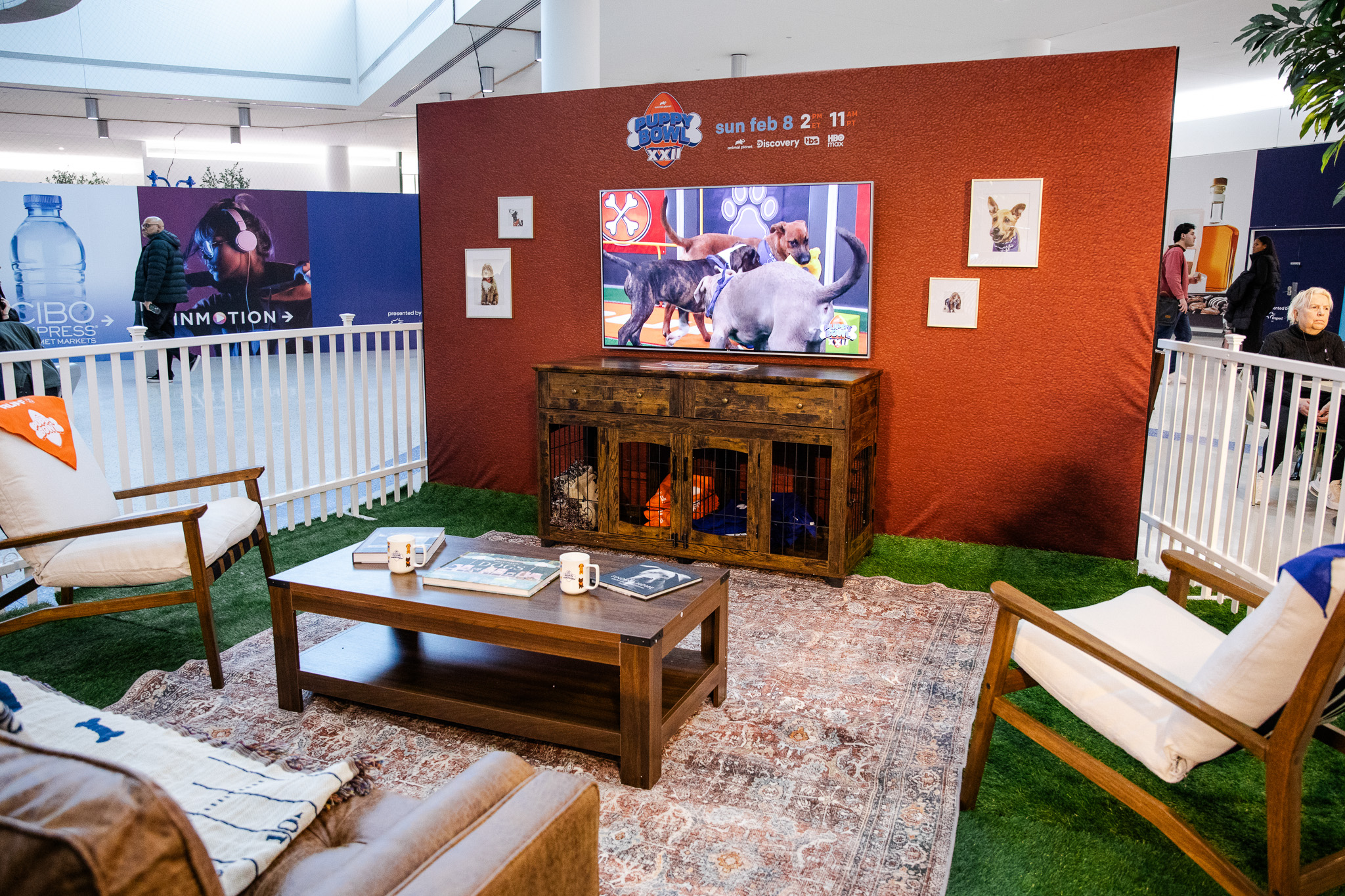
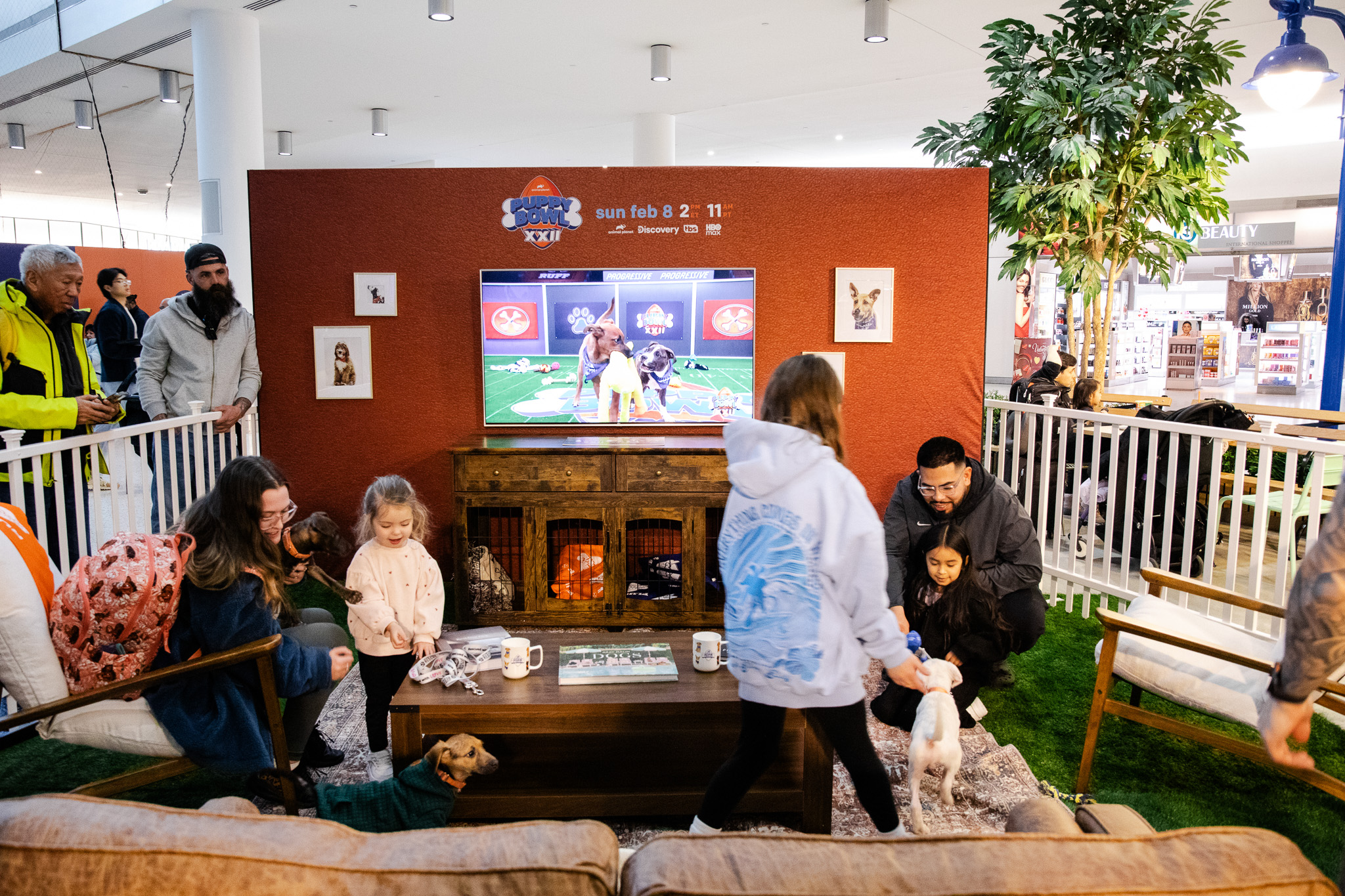
The footprint was built around a single anchoring element: a deep terracotta back wall carrying the Puppy Bowl XXII logo and broadcast details above a large TV playing the show on loop. A rustic wooden credenza below the screen doubled as a crate, keeping the dog-friendly function of the furniture visible but warm rather than clinical.

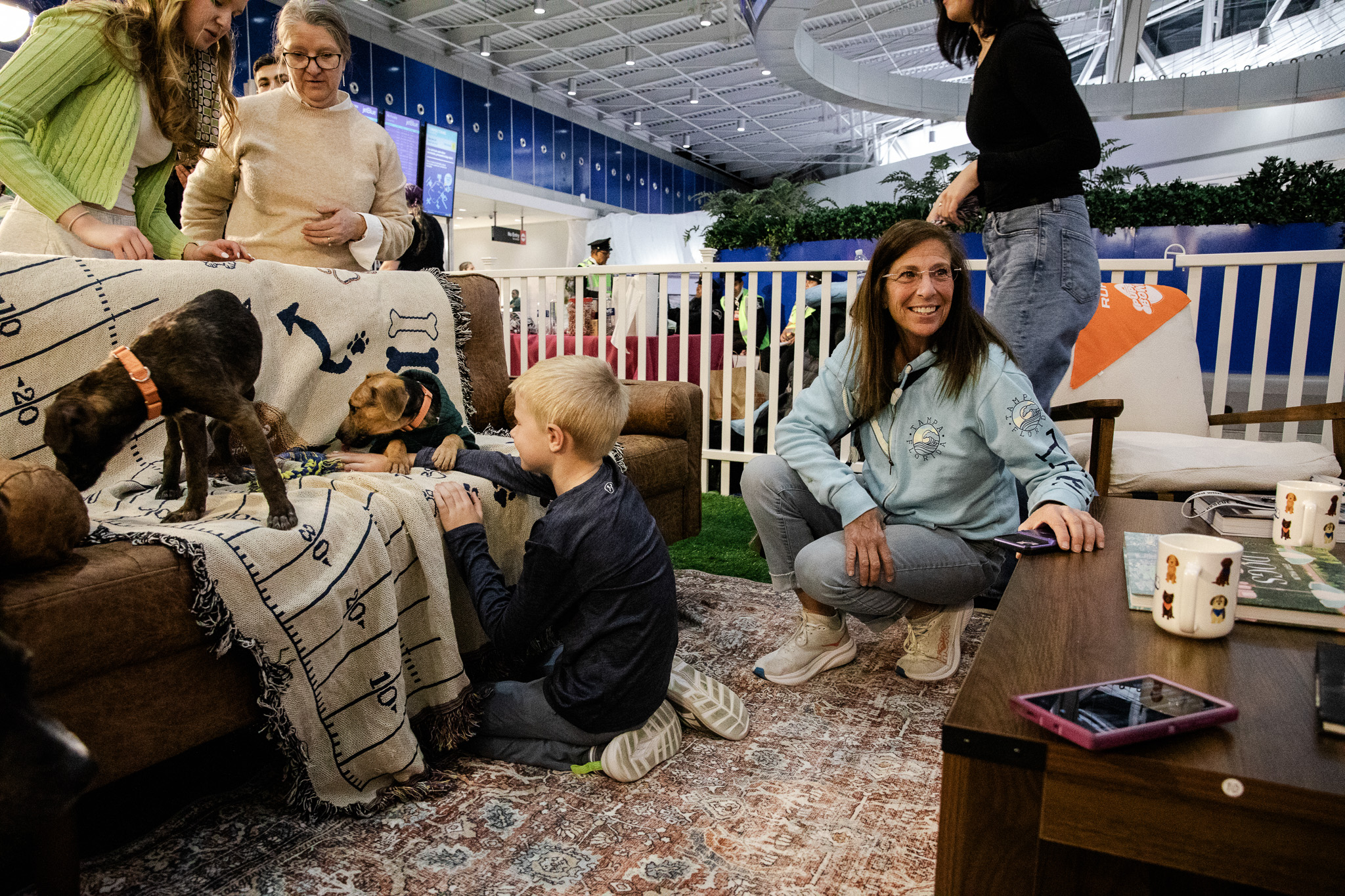
In front of the wall, the furniture arrangement was deliberately residential. A caramel leather sofa, wooden armchairs with cushioned seats, a coffee table, and a Persian rug over artificial grass. Framed portraits of dogs hung on the wall like family photos. The effect was immediate and intentional: this does not look like an airport activation. It looks like somewhere you would actually want to spend time.

The enclosure was bounded by a low white picket fence, which reinforced the domestic reading while keeping the space defined and the puppies contained. On the reverse of the back wall, a large-scale key art placement functioned as a billboard for anyone moving through the terminal without entering the space, ensuring the installation worked from every direction.

Furniture selection was a genuine collaboration: producers Jason Klein and Harris Freeman sourced options within the budget, and I made the final call on what came together as a coherent, liveable whole.

Living room space full view Back wall key art display Sofa and furniture detail

Puppies

The space worked because the concept was right. Travelers who would never have stopped at a conventional brand activation sat down on the sofa, picked up a puppy, and stayed. The combination of a familiar domestic environment, live animals, and a television playing exactly what the space was promoting created a self-contained experience that needed no explanation and no hard sell.

Sometimes the most effective experiential design is the kind that makes people forget they are standing in an airport.

Next Project

AudioTopography